








December 9, 2017 - Seminar "Psychological aspects of the upbringing of children and adolescents with diabetes mellitus"
Views: 3783

 |
 |
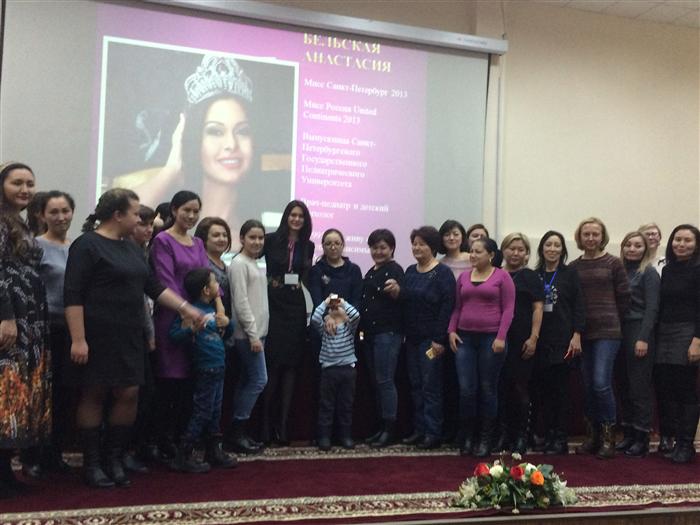 |
The medical faculty of the Kazakh National University named after al-Farabi together with the Public Fund "Family Health" on December 9, held a seminar dedicated to the World Diabetes Day. Topic of the seminar «Psychological aspects of the upbringing of children and adolescents with diabetes mellitus». As a speaker, the psychologist Anastasia Belskaya (St. Petersburg) was invited. The seminar was attended by parents of children suffering from type 1 diabetes from Kazakhstan and Kyrgyzstan. The interest of the audience was caused not only by a professional look at the topic of the seminar, but also by the fact that Anastasia Belskaya has an established diagnosis of "Insulin-dependent diabetes mellitus". The main idea of A. Belskoy's speech was the conviction "Diabetes is not a sentence!".
Diabetes is a metabolic disorder that interferes with the body's ability to properly metabolize sugar. In order for glucose to enter the cells of the body, you need insulin, produced by the pancreas. In diabetes, carbohydrates are not absorbed by cells because of the complete absence of the hormone insulin or because the cells can not fully use the insulin present in the body. In this case, glucose remains in the blood, and the body cells begin to "starve." Without the introduction of insulin injections, sugar in the blood will constantly increase. Diabetes requires constant monitoring of the patient for his condition. The course of the disease depends on a number of factors: from personal characteristics, age, social conditions, in which a person is.
Diabetes is a metabolic disorder that interferes with the body's ability to properly metabolize sugar. In order for glucose to enter the cells of the body, you need insulin, produced by the pancreas. In diabetes, carbohydrates are not absorbed by cells because of the complete absence of the hormone insulin or because the cells can not fully use the insulin present in the body. In this case, glucose remains in the blood, and the body cells begin to "starve". Without the introduction of insulin injections, sugar in the blood will constantly increase. Diabetes requires constant monitoring of the patient for his condition. The course of the disease depends on a number of factors: from personal characteristics, age, the social conditions in which the person is, the way of life of the patient, his regime and the nature of nutrition, from physical activity, from the society's response to the disease.
Currently, leading experts in the field of endocrinology recognize diabetes as a "global non-infectious epidemic". According to statistical data, in the last decade the number of patients has increased to 7% of the total population of the planet. Children and adolescents under 16 years of age among patients with diabetes mellitus make up 3-8%.
The relevance of the seminar is due to the fact that at present the structure of psychological care for children with type 1 diabetes and their parents on the basis of hospitals and departments of endocrinology is not developed in our country. Especially often psychological problems associated with the disease occur in children and adolescents. Often in patients there is a negative attitude towards the disease, to its therapy. At the same time, the structure of self-esteem suffers, a "complex of differences" from healthy peers is formed. In children and adolescents, normal activity is limited, due to the need to control diabetes mellitus. There are difficulties in socio-psychological adaptation, there is a fear of telling about diabetes in the company of friends. The child retreats, can be set up either hostile or becomes shy.
The disease places a number of restrictions in choosing a professional path, which leads to uncertainty about their future in young people.
The participants of the seminar asked many questions concerning the psychological side of the problem of diabetes mellitus - the social adaptation of children in the team, as well as the need for sports, nutrition and other aspects of life.
The organizers of the seminar received a lot of positive feedback about the event.