







INNOVATIVE STUDIES ON BIOFORTIFICATION BY IMPORTANT WHEAT MICRO-NUTRIENTS AT THE AL-FARABY KAZAKH STATE UNIVERSITY
Views: 3740
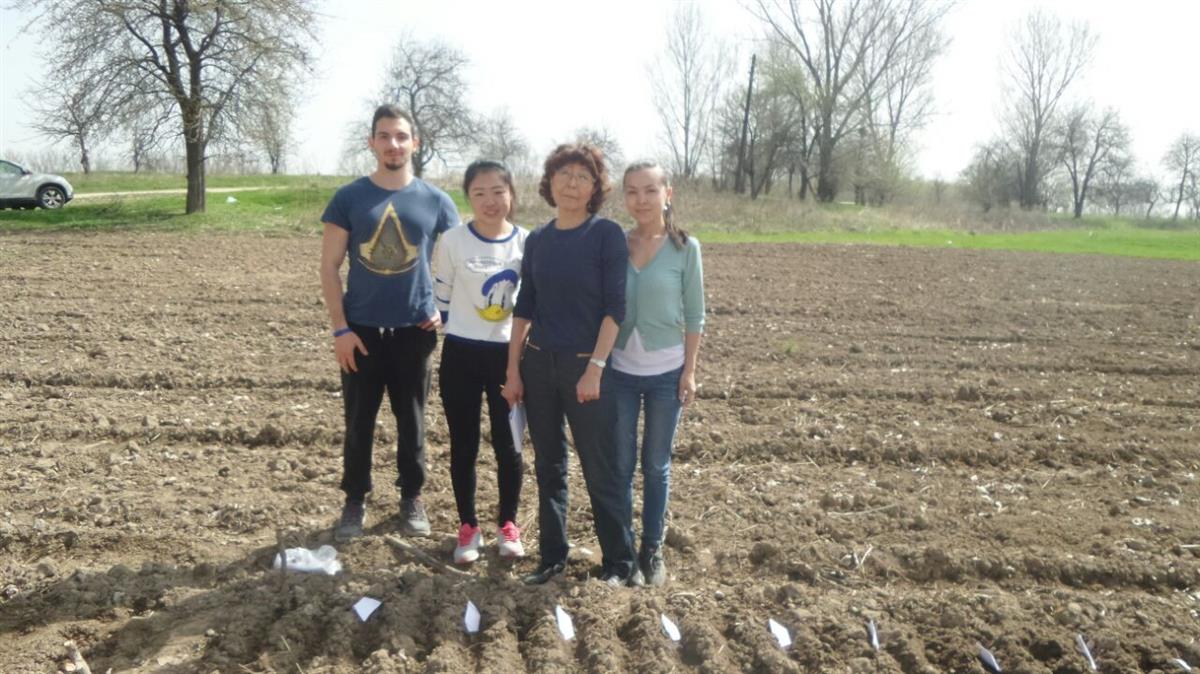
The research on the national project KAZ 5/004 "Developing Drought Tolerant and Disease Resistant Wheat Varieties with Enhanced Nutritional Content Using Mutation Breeding" has been launched at the Faculty of Biology and Biotechnology of the al-Farabi Kazakh National University since 2018. "This new project is funded by the International Atomic Energy Agency (IAEA) with counterpart professor, Dr. Kenzhebaeva S. The total funding is 151 797 euros. In the framework of the project, the IAEA will provide the university with the opportunity to study and increase the qualifications of the internationally recognized research centers, technical expertise, international expertise, expert advice, as well as up-to-date equipment to carry out the experiments. The successful implementation of this project is aimed at expanding the genetic diversity of wheat based on physical mutagenesis and using on wheat varieties, released in Kazakhstan and creating resistant to drought and disease resistant wheat varieties with improved grain nutritional quality.
It is known that as the world's population grows, along with ensuring a sustainable increase in agricultural production, more efforts and innovations are needed to improve the nutritional quality of wheat grain. Wheat is the main grain food culture, providing 28% of the nutritional substance and up to 60% of the daily calorie intake and also a key source of micronutrients in the daily diet. However, wheat grain has a low content of the most important micronutrients necessary for a fully balanced diet, aimed at improving the health of the population. In this regard, biofortification (genetic enrichment) of wheat grain with micronutrients is necessary, which also has multi-plicative advantages. Biofortification is the most cost-effective and effective way to reduce the micronutrient deficiency. The lack of micronutrients in human nutrition is ubiquitous. Especially acute is the deficit of Fe and Zn, affecting more than half the world's population.
The priority results, first developed in Kazakhstan drought-resistant and disease-resistant wheat varieties, which are biofortified by micronutrients, including protein, iron and zinc will be obtained as a result of this project. The use of biofortified wheat varieties, combining high adaptibility, is undoubtedly of scientific and practical importance not only for Kazakhstan, as one of the recognized world leaders of grain production and an exporter, but also for other countries. One of the important aspects of scientific research on the micronutrients biofortification of food crops is to ensure the optimal daily diet of human beings, as a priority strategy for the development of society.
Prof., d.b.s. S.S. Kenzhebaieva
