News

«Abay and national identity»

4/17/2020

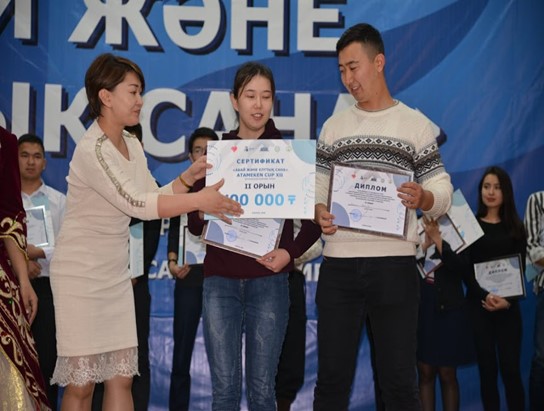
In honor of the 175th anniversary of Abay, Kazakh national pedagogical university named of Abay organized a Republican tournament for the rector's Cup "Abay and national identity" in the category "Adil Torelik" awarded senior lecturer of the Department of biodiversity and bioresources of al-Farabi Kazakh national university, Phd Seilkhan Ainur


Chair of biodiversity and bioresources

www.kaznu.kz

Read more >>

Some lessons from the new coronavirus pandemic

4/17/2020

Analysis of mortality statistics from COVID-19 in the 15 most affected countries of the world showed that the average global mortality rate for coronavirus infection on April 13, 2020 was 6.2% of 1,846,963 officially registered patients. This death rate is tens or hundreds of times higher than the death rate from various types of known flu virus strains, which makes it completely incorrect to compare these infections. A new coronavirus pandemic has reached a particularly large scale in the far, far from the center of infection in China, the ocean expanses of the United States, where out of 550 thousand people are infected. 22,300 patients died, and the peak of the epidemic is still ahead.

But if in the United States the death rate was lower than the global average and was equal to 4%, in some European countries, the death rate exceeded 10%: 12.7% in Italy, 12.14% in Belgium, more than 10% in Spain, Holland, France. A much lower death rate was observed on April 13 in Germany, where out of 127,854 cases, 3,022 people died (2.36%), and in Austria out of 13,945 cases, 350 people died (2.5%).

What explains this significant difference in mortality among patients with new coronavirus pneumonia from the listed countries? All the above-mentioned countries belong to the group of highly developed economically states. But the success of the state's medical service in fighting the pandemic is determined by many factors, and the economic factor is only one among others. A similar pandemic, as well as another large-scale test (war. natural disaster, etc.), this is an exam for any state, any nation, and every citizen. The outcome of a pandemic is determined not only by the biological characteristics of the pathogen (virulence, contagiousness, features of the incubation period, resistance to external influences, including pharmacological drugs, etc.) and the resistance of the human body, but also by the level of health organization in the state, the qualifications of medical personnel, the number and equipment of medical institutions with equipment and Pharmacopoeia, the attitude of the state to health care. And, of course, the success of the fight against an epidemic of this scale also depends on the education, responsibility, solidarity, solidarity and humanism of citizens, their trust, competence and fairness of the authorities...

Look at what countries that are currently coping better with the pandemic have in common. If you look at Finland, Iceland, Denmark, New Zealand, and other countries with low rates of death from COVID-19, the answers may be very different. You can refer to the fact that these are small countries, but, for example, Germany with its 83 million population is difficult to call small, or small island states like Iceland with 1,720 infected and 8 deaths (0.5%) per 350 thousand population, or New Zealand with 1,386 infected and 9 deaths per 4. 900 thousand population. But the UK is also an island, and the situation there is quite deplorable with 10,629 deaths out of 85,206 cases (8.3% mortality). In South Korea, which is a peninsula, but is also actually an island, because of the tightly closed border with North Korea, 214 out of 10,512 patients died (2%). The country has taken extraordinary measures to mass test the population for infection, strict quarantine and high-tech and professional treatment.

Germany is a country with an exceptionally hard-working and disciplined population, a highly developed real economy, education and science, great cultural traditions and well-equipped research and medical institutions. A significant role in the mobilization of the state against the pandemic was played by the government led by Chancellor Angela Merkel, who in early March warned her compatriots about the drama of the situation: at least 70% of the population will get sick with the coronavirus, she said, and urged them to take this threat as seriously as possible. The same disciplined, educated and accustomed to life in conditions of permanent danger, the people of Israel have a record low mortality rate of 0.9% of 11,145 patients.

Today, April 15, the number of cases of coronavirus pneumonia is approaching two million in the world, and all countries are trying to minimize losses from this pandemic. But among the many factors that determine the measure of success in this confrontation, the first place, according to the world's leading experts, is not so much the early detection of infected people, not their treatment by highly qualified medical personnel using the most modern technologies, equipment and Pharmacopoeia, but physical isolation, a large-scale effective system of quarantine measures among the population. Among those who violate the quarantine, there are many young people who believe that the elderly are seriously ill and dying.

Yes, it is true that about eighty percent of the world's deaths occur in this age group [according to national reports from many countries]. Most often, this is explained by chronic diseases and a weakened respiratory system, and this is true. However, young people also get sick, although not so hard and much less often with a fatal outcome. But currently, at the Sklifosovsky Institute and the Kommunarke infectious diseases hospital in Moscow, about 40% of those seriously ill with community-acquired pneumonia are under 45 years of age. Young people are less likely to die, but young people also suffer from lungs, since after discharge, for a long time due to fibrosis of the pulmonary parenchyma, the functional capabilities of the respiratory system and the body as a whole are significantly reduced. Do not forget that infected young people are a source of infection for relatives and friends, as well as for everyone around them.


Professor S. T. Nurtazin

Associate Professor I. M. Zharkova

Chair of biodiversity and bioresources

www.kaznu.kz

Read more >>

Observe safety measures!

4/15/2020

The number of cases of coronavirus pneumonia is approaching two million worldwide, and all countries are trying to minimize losses from this pandemic. But among the many factors that determine the measure of success in this confrontation, the first place, according to the world's leading experts, is not so much the early detection of infected people, not their treatment by highly qualified medical personnel using the most modern technologies, equipment and Pharmacopoeia, but physical isolation, a large-scale effective system of quarantine measures among the population. Among those who violate the quarantine, there are many young people who believe that the elderly are seriously ill and dying. But this is not the case. Young people also get sick, although not so hard and much less often with a fatal outcome. But even young people suffer from lungs, because of fibrosis of the pulmonary parenchyma, the functional capabilities of the respiratory system and the body as a whole are significantly reduced. We need to talk more and write about it in social networks.

Professor S. T. Nurtazin

Associate Professor I. M. Zharkova

Chair of biodiversity and bioresources

www.kaznu.kz
Read more >>

ON APRIL 13, 2020, THE 2ND YEAR DOCTORAL STUDENT OF THE GEOBOTANY SPECIALTY ORAZOV AIDYN, AS THE PROJECT APPLICANT, DEFENDED HIS PROJECT IN THE SECOND STAGE OF THE «STOP CORONAVIRUS» SCIENCE FOUNDATION

4/13/2020

On April 13, 2020, the 2nd year doctoral student of the Geobotany specialty Orazov Aidyn, as the project applicant, defended his project in the second stage of the «Stop Coronavirus» Science Foundation, the theme of the project was «SAKTAN» Multifunctional Social Application for Information and Data Exchange for remote diagnosis of somatic and psychological health. Also involved in the project team: Myrzagalieva Anar, Doctor of Biological Sciences; Tustubaeva Shynar, 2nd year undergraduate student of EKSU named after S. Amanzholova; Serikbaev Daulet; Skakova Karlyga, an epidemiologist.

Chair of biodiversity and bioresources

www.kaznu.kz

Read more >>

Abai Kunanbayev's 175th Anniversary

4/10/2020

Curator-adviser of the Department of Biophysics and Biomedicine A.N. Kozhakhmetova held the event " Abai Kunanbayev's 175th Anniversary" on February 28 in the hostel No. 7. During the event, students read poems and words of edification by Abay Kunanbayev.


Kozhakhmetova A.N.

Senior lecturer at the Department of Biophysics and Biomedicine


Read more >>

ABOUT EXPERIENCE OF REALIZATION OF DISTANCE EDUCATIONAL TECHNOLOGIES ON THE EXAMPLE OF THE DEPARTMENT OF BIOTECHNOLOGY IN THE CONDITIONS OF QUARANTINE

4/10/2020

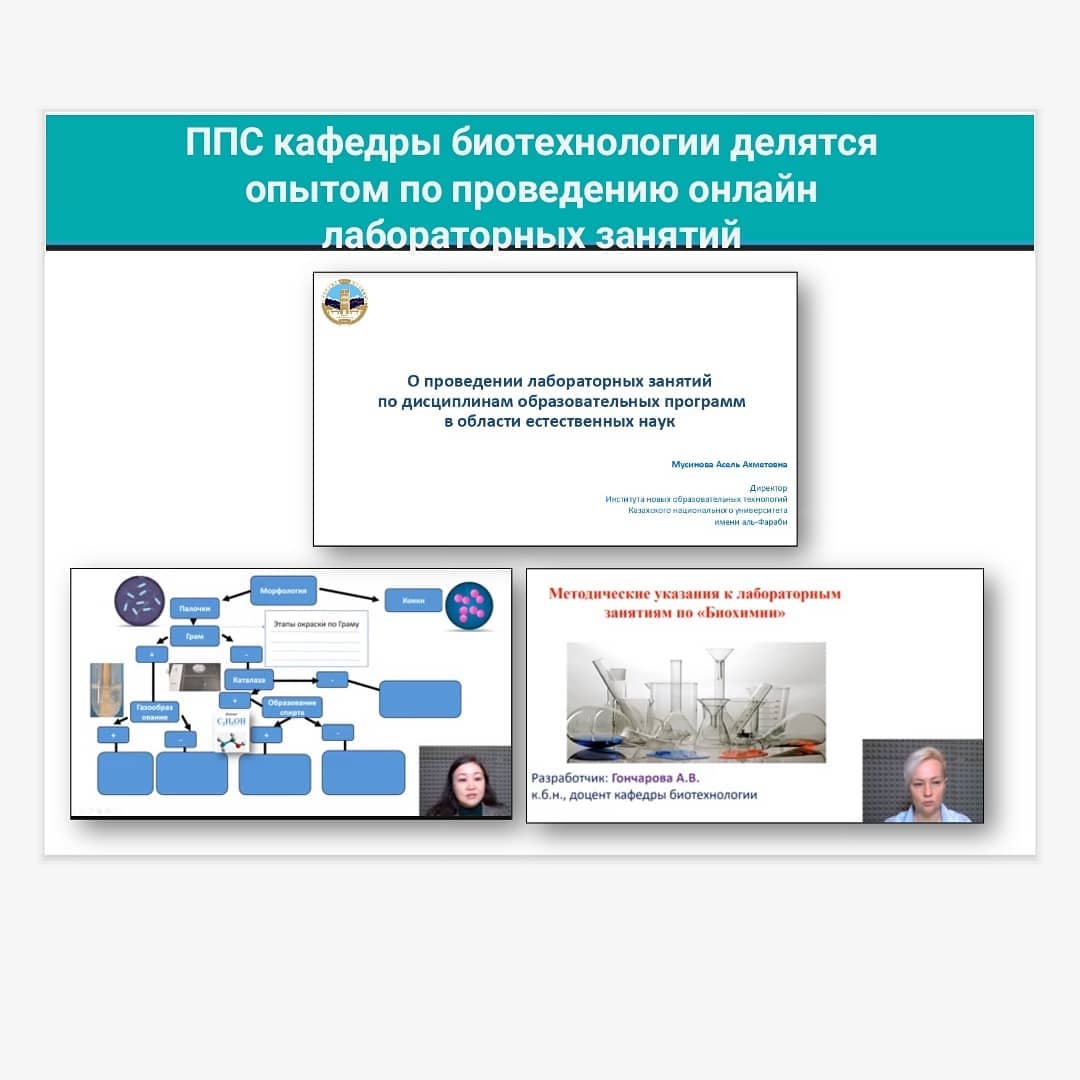
Teachers of the biotechnology department of Al-Farabi Kazakh National University began online streaming training in quarantine, with the dissemination of experience in conducting laboratory classes in the disciplines of educational programs in the field of natural sciences for all universities in Kazakhstan.

The Department of Biotechnology switched to online training painlessly, as well as without changes in the teaching staff schedule, since the Univer, Moodle, and eDX platforms with MOOC content already available at the university served as a kind of basis for colleagues to conduct distance learning.

All classes today are held in Kazakh, English and Russian in the usual mode, as teachers were able to re-adapt the contents of lectures, laboratory classes, and CDS in a short time, while demonstrating their high IT competence.

In the conditions of streaming, the educational process is implemented using various platforms, such as Zoom, Microsoft teams, Google meet. In addition, teachers of the Department of Biotechnology conduct classes not only in a form of streaming, but also our colleagues conduct chat classes, educational games, interactive training using Kahoot, interactive cases using animated infographics, etc.

In addition, the demand for MOOCs has increased to date. So at the MOOC "Biotechnology basics" 239 students were trained. In the near future we plan to record a number of video lessons for the next academic year for the eDX platform in the areas of microbiology, biochemistry and environmental biotechnology. Content for these video tutorials is currently being developed by our teachers. Faculty colleagues record lectures for the Coursera platform in the field of molecular biology; for the eDX platform in the areas of biophysics and zoology, which allows to successfully use these tools in the educational process.

Head of the Biotechnology Department Kistaubaeva A.S.

Read more >>

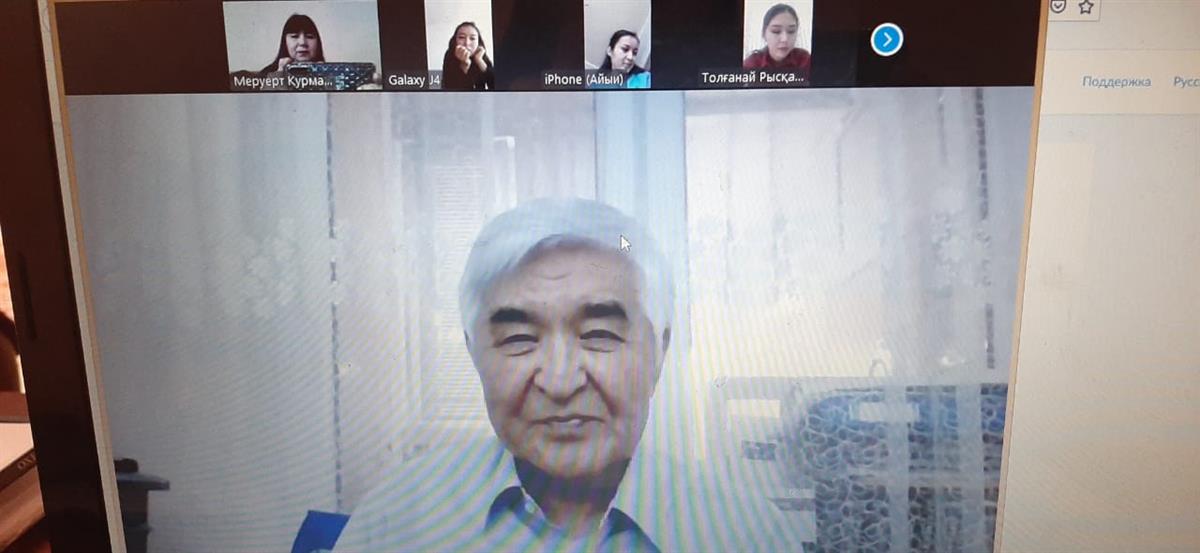
An online seminar for research in the specialty of a 2-course biology and geobotany

4/10/2020

On April 10, the next seminar of the Faculty of biology and biotechnology, Department of biodiversity and bioresources was held online. The seminar was attended by a report on the research work of 2nd-year Master students of the specialty «6M061300-Geobotany», «6M060700-Biology». The seminar was attended by the head of the Department Kurmanbayeva M. S., as well as the teaching staff of the Department: Saparov K. A., Inelova Z. A., Nazarbekova S. T., Mamurova A. T., Childebayeva A., Aldasugurova Ch. Zh., Tynybekov B. M. Questions were asked, to which appropriate answers were given and the readiness of the dissertation work for defense was determined. The secretaries of the Department of Aldasugurova Ch. and Pangereiov B. recorded online seminar.

Chair of biodiversity and bioresources

www.kaznu.kz

Read more >>

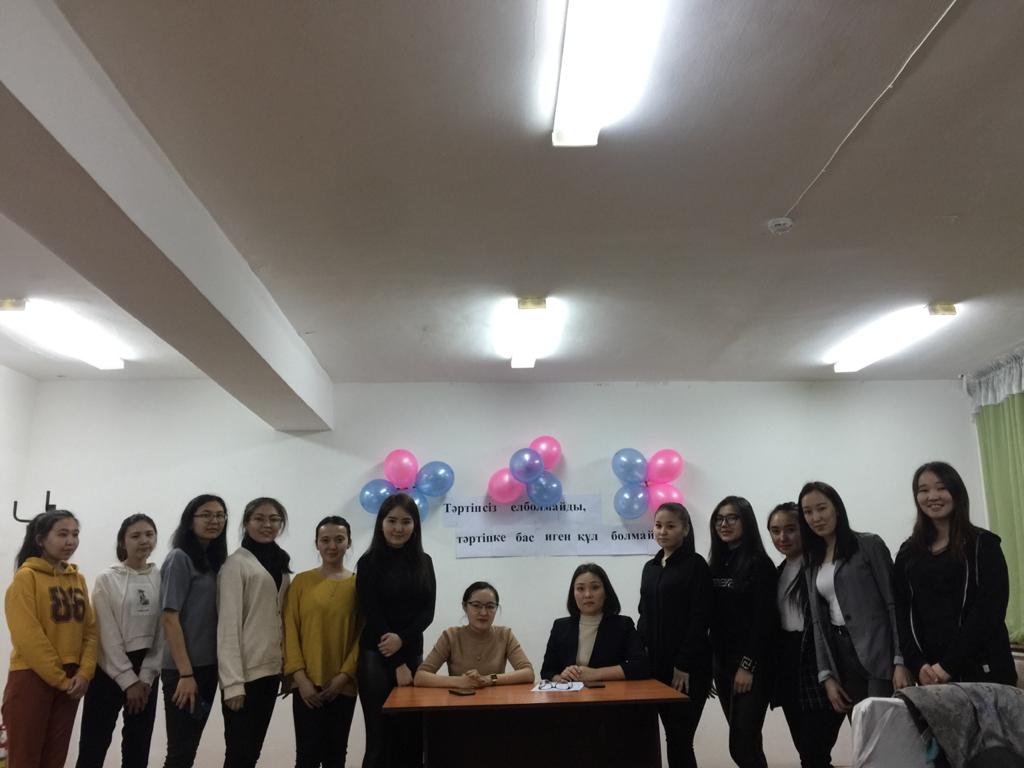
Tartіpsіz el bolmaydy, tartіpke bas igen kul bolmaidy

4/8/2020

February 27, 2020 from 18:00 to 19:00 in student house No. 7, associate professor of the Department of Biophysics and Biomedicine, KazNU named after Al-Farabi Abylaykhanova N.T. and teachers of the department Esenbekova A., Saydakhmetova A., Usipbek B. held a meeting with students of the Faculty of Biology and Biotechnology within the framework of the project “Kayyrymdy Kogam”.

During the meeting, a lecture was given on the topic " Tәrtіpsіz eal bolmaydy, tәrtіpke bass igen kul bolmaydy ". The lecture provided students with a lot of information.


Ablaykhanova N.T.

deputy head of the department for academic, methodological and educational work, associate professor


Esenbekova A., Saidakhmetova A., Ussupbek B.
teachers of the department of biophysics and biomedicine

Read more >>

VII International Conference of Students and Young Scientists «Farabi Alemi»

4/8/2020

Секретарь секции 3: стр. преподаватель Конысбаева Айжан Амиржановна On April 8, 2020, the VII International Conference of Students and Young Scientists “Farabi Alemi” was held at the Faculty of Biology and Biotechnology, which this year was held in an online format. Altogether 112 sections were received for 1 section "Actual problems of biology and biodiversity conservation". For the online meeting, 10 reports were selected. Section winners: I place - Amangeldina M.E. II place - Mukanova E.T., Idayat N.I. III place - Alibay A.N., Zhәmit A.E., Urgenishbaeva J.I.

Certificate for the relevance of the topic of the report for practical use: 1st year doctoral students Kazakh National University named after al-Farabi, Almaty G.B. Jumakhanov, A.K. Dzhienbekov Certificate for an interesting presentation: 4th year students Al-Farabi Kazakh National University, Almaty D. Isaev Certificate for an interesting report: 4-year students of Kazakh National University. Al-Farabi, Almaty Қanieva G.A.   Congratulations to the winners! We wish all participants of the contest new achievements and creative victories!  


teacher Konysbaeva Aizhan Amirzhanovna

Chair of biodiversity and bioresources 

www.kaznu.kz

Read more >>

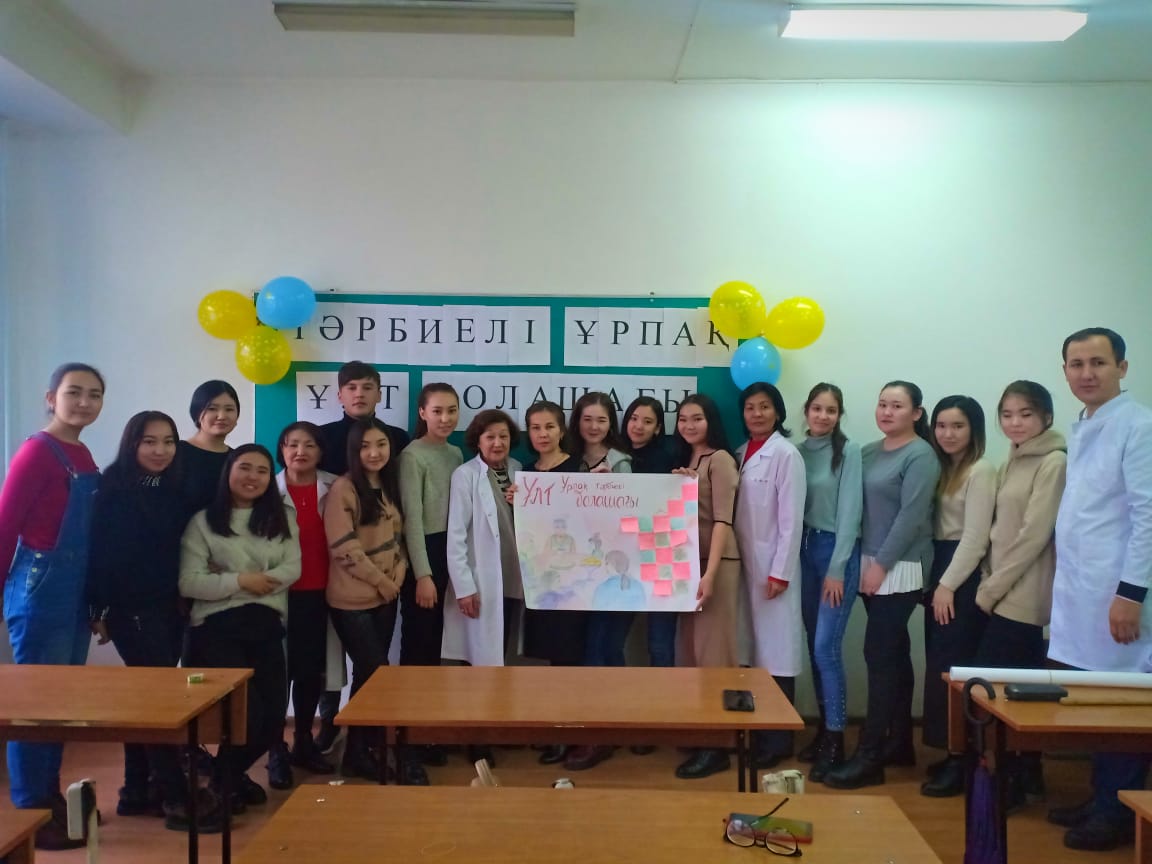
Educated generation - the future of the nation

4/6/2020

Curators-advisors of the Department of Biophysics and Biomedicine kozhakhmetova A. N., Kulbayeva M. S., Srailova G. T. and students held the event "Educated generation-the future of the nation".

As you know, the fate of a nation is in the hands of generations. Therefore, in order to educate young people about humanism, morality, and well-being, the event was organized on 27.02.2020, at 15.00, in 435 audience.


Read more >>