News

Roundtable on Human Rights Day

12/10/2021

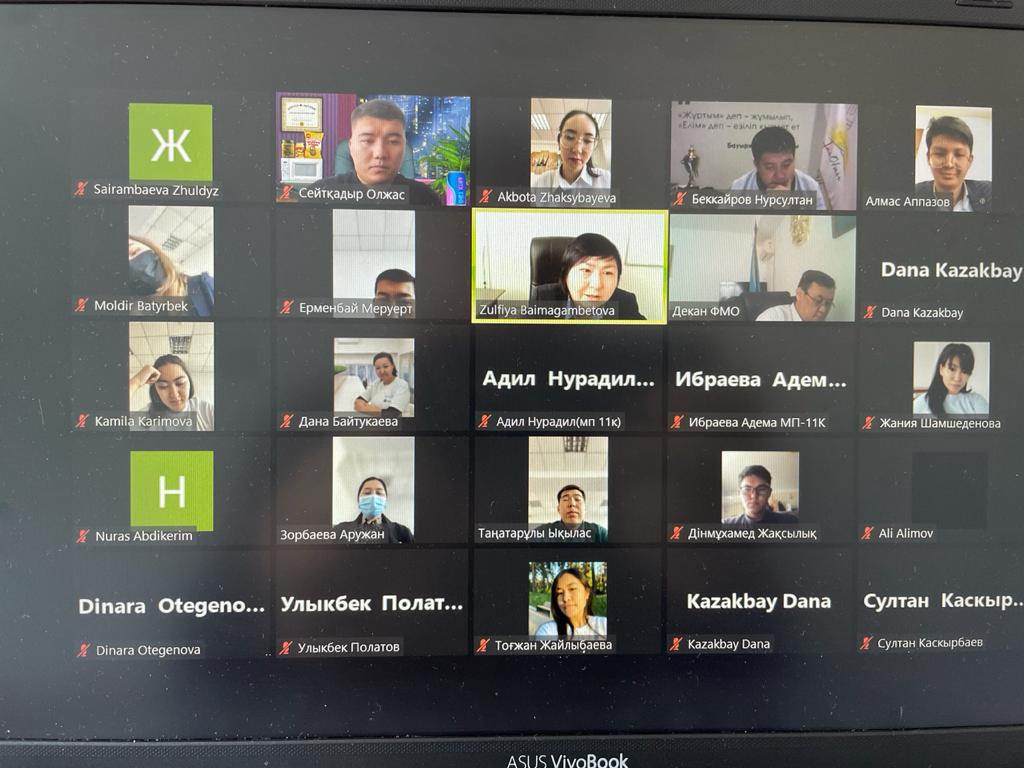
On December 9, 2021 the chair of international law of the faculty of international relations of Kazakh National University named after Al-Farabi took part in the round table devoted to the Human Rights Day, which is celebrated annually on December 10 in honor of the adoption of the Universal Declaration of Human Rights by the General Assembly of the United Nations in 1948 - the system of rights, to which every person is entitled.

Read more >>

Visiting the Museum of the Al-Farabi Kazakh National University

11/11/2021

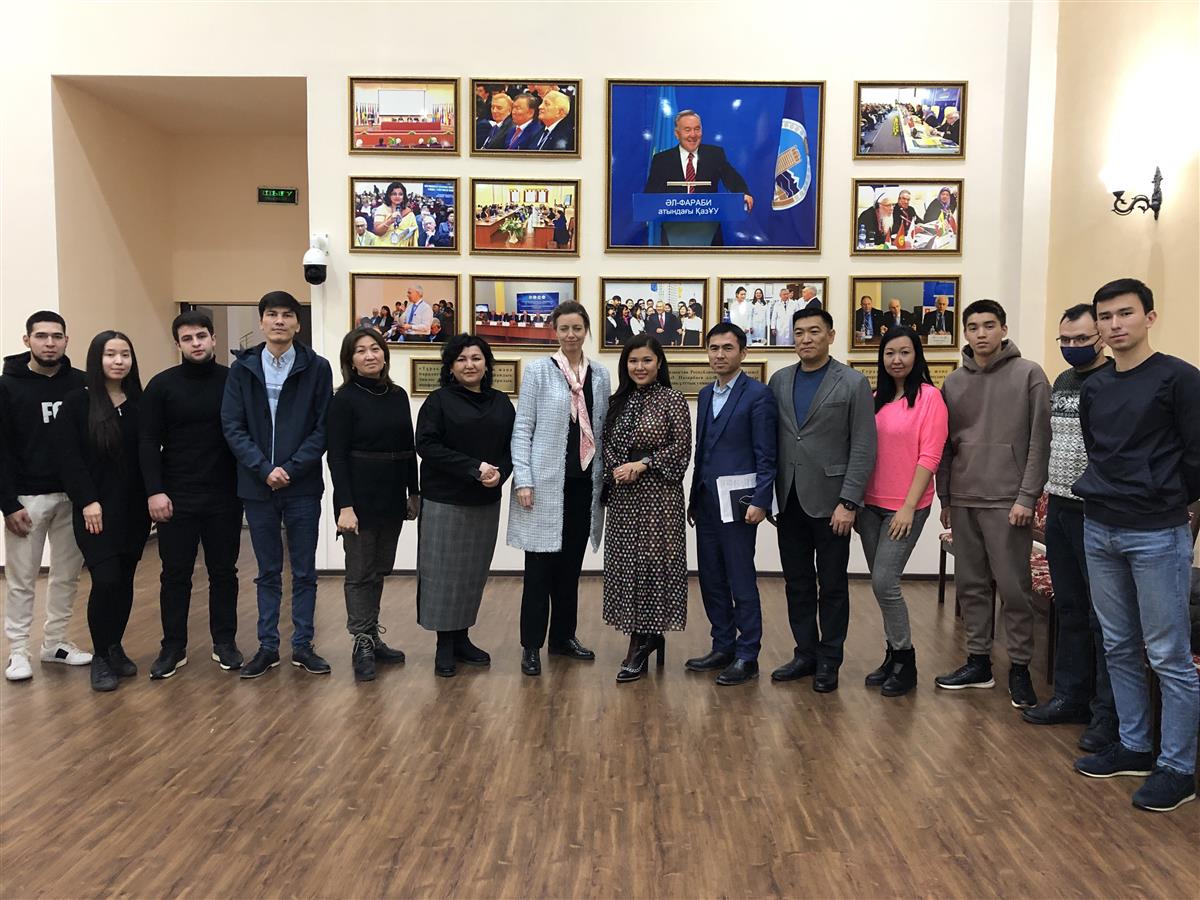
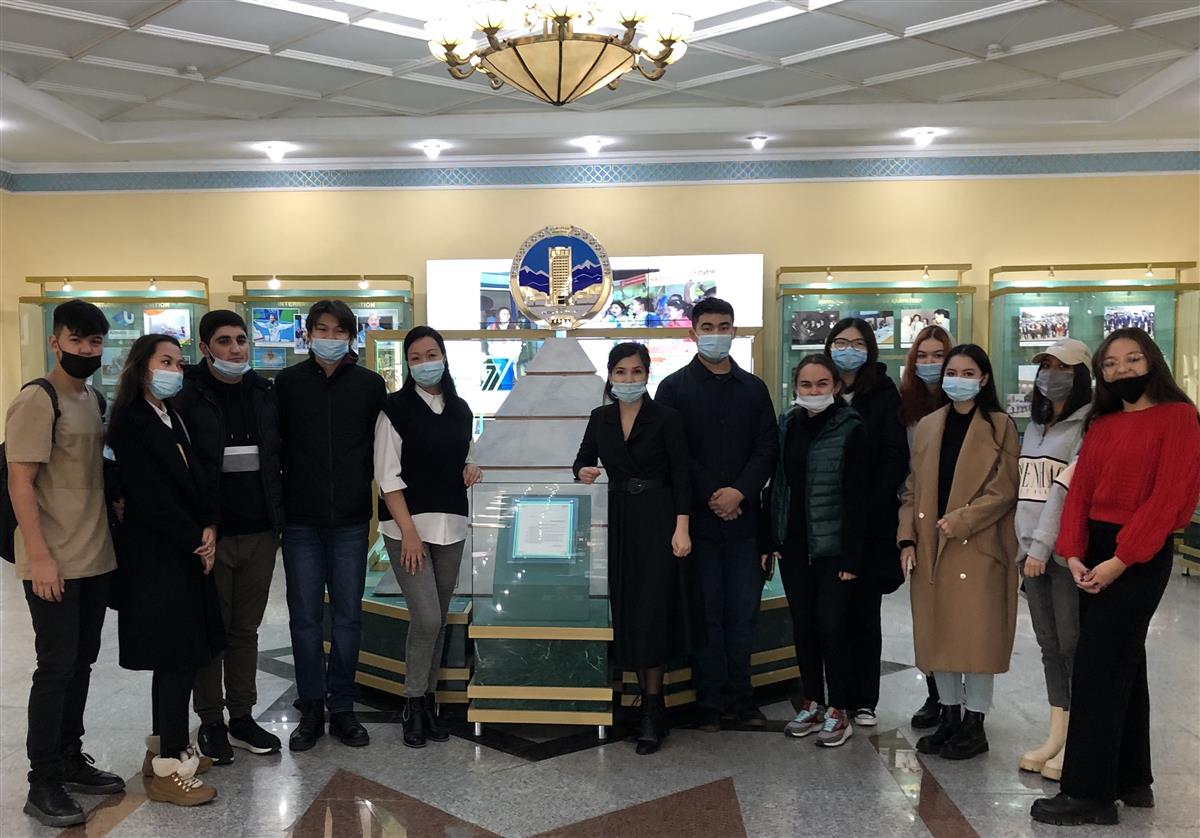
On November 11, 2021 the 1st and 2nd year students of the educational program "International Law" together with the curators-advisers visited the Museum of Kazakh National University named after Al-Farabi. Students were acquainted with a historical retrospective of Al-Farabi Kazakh National University, reflecting the major milestones in the development of education and science in Kazakhstan, with unique in content and artistic embodiment of the complex, dedicated to the legacy of the great thinker of the East, the philosopher Abu Nasr Al-Farabi and many other cultural and historical values of the university.

Read more >>

A roundtable discussion was held on the topic: "Kazakhstan's participation in the WTO: first results and prospects", dedicated to the 30th anniversary of independence of the Republic of Kazakhstan

10/27/2021

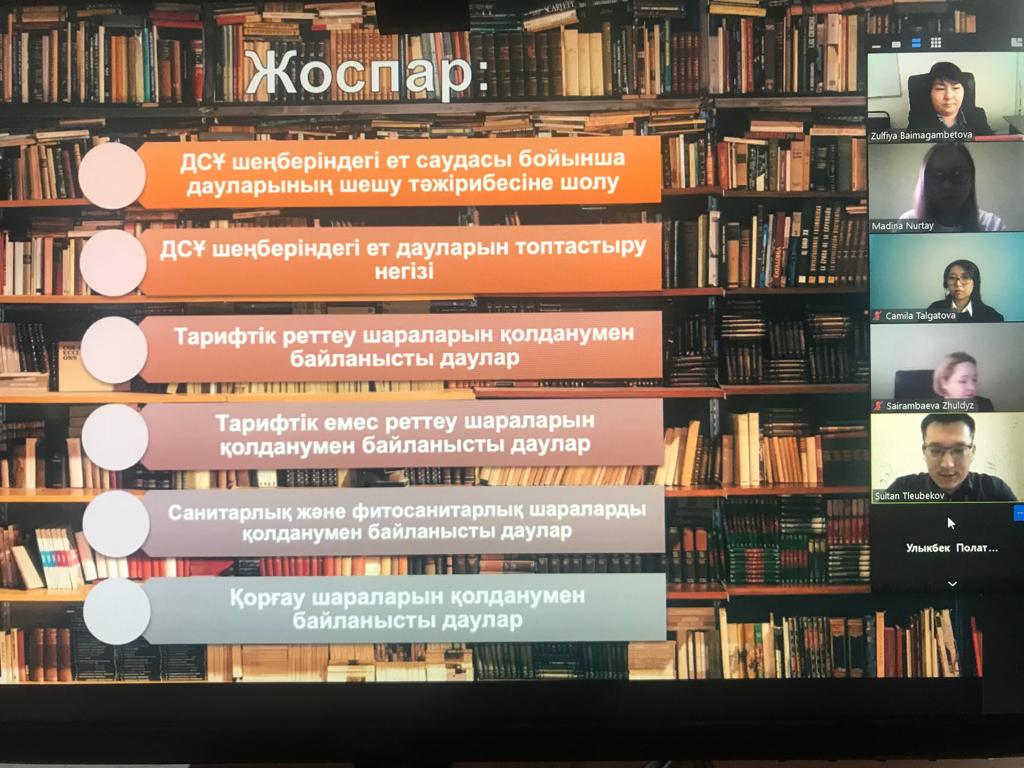
On October 22, 2021, a roundtable discussion was held online on the topic: "Kazakhstan's participation in the WTO: first results and prospects", dedicated to the 30th anniversary of independence of the Republic of Kazakhstan. The roundtable discussion was organized by the Center "WTO and International Trade Law", operating at the Department of International Law, Faculty of International Relations of Al-Farabi Kazakh National University.

Read more >>

Opening of the debate club "Lex"

10/27/2021

On October 27, 2021 the grand opening of the student debating club "Lex", organized by the International Law Department of the Faculty of International Relations of Kazakh National University named after Al-Farabi took place. 

Read more >>

ON MAY 26-27, 2021, THE 5TH KAZAKH-FRENCH-KOREAN INTERNATIONAL SCIENTIFIC CONFERENCE ON INTERNATIONAL LAW “EURASIAN CHALLENGES TO INTERNATIONAL ECONOMIC LAW AFTER BREXIT IN THE CONTEXT OF COVID AND RCEP”WAS HELD.

5/26/2021


On May 26-27, 2021, the 5th Kazakh-French-Korean International Scientific Conference on International Law “Eurasian Challenges to International Economic Law after Brexit in the Context of COVID and RCEP” was held.  

Conference organizers: Normandy University of Le Havre, LexFEIM Research Center (France) University of Caen Normandy, Institute DESMOLOMBES (France) InHa University, Faculty of Law (South Korea) Al-Farabi Kazakh National University, Faculty of International Relations, Department of International Law The 5th international scientific joint Kazakh-French-Korean conference is aimed at analyzing current problems in the field of international trade law. EURASIA represents, as a potential, half of the world's population, or would represent, if it were economically and regionally integrated, the largest consumer market and production potential on earth. Based on this geopolitical and geo-economic background, this 2021 conference develops a problematic or analytical thread that explores whether such Eurasian economic integration is achievable or not. The conference participants will analyze this link or this relationship between these events (events in the EU, the US elections, the pandemic), as well as other Eurasian events, such as the situation in Belarus, the progress of the Chinese BRI and Kazakhstan's Nurly Zhol program, as dynamics affecting all the sub-regions of Eurasia, and how these relations and these relations are likely to form the structure of the international economic dynamics of their legal regulation on the continent. In addition to studying the consequences of BREXIT for the EU, the global economy and political stability in Europe and Asia, the conference participants are expected to consider the potential risks of similar situations in the integration associations of Eurasia, the negative consequences for individual states and the entire region, and ways to minimize them. 

 

Read more >>