





Chair of Language Training and General Education for Foreign students
CHAIR OF TRAINING LANGUAGE AND GENERAL EDUCATION
FOR FOREIGN STUDENTS
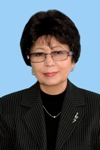
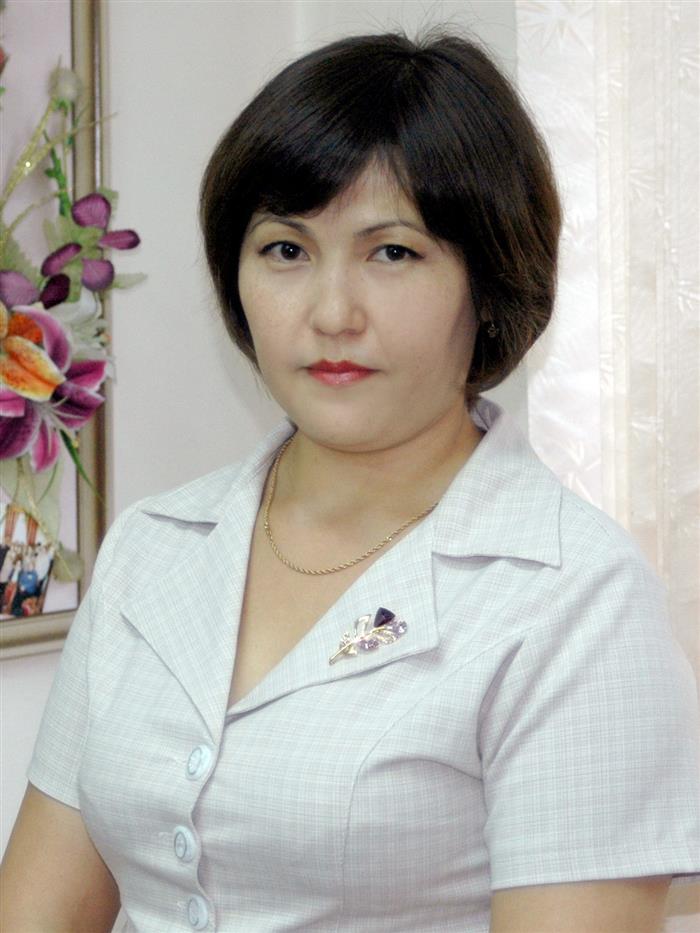
Until 2002 at the training faculty for foreign citizens of KazNU named after Al-Farabi had 2 chairs: a chair of Russian and Kazakh languages, and a chair of general education disciplines. Named after various reorganizations, cutting of the contingent of the trainees (90-ties), and correspondingly cutting of personnel at the faculty, there was remained a chair of Russian and Kazakh languages. Teachers of general education disciplines were distributed across the whole University. In 2005 they came to the conclusion: in connection with an increase of the number of students (up to 300), to unite all teachers in one chair and give it a name – a chair of Kazakh and Russian languages (with the section of general education disciplines). Currently, a team of the chair consists of 70 people. A professor, Doctor of philological sciences Zh.A. Nurshaikhova is in charge of the chair.
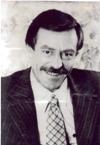
In 1985 in KazNU named after Al-Farabi (former KAZGU named after S.M. Kirov) there appeared a new chair – a chair of RAF (Russian language as a foreign one), which was headed by V. A. German, candidate of philological sciences, associate professor. He actually started the work from zero: he collected the teachers for the chair by grope; during two years with love created a remarkable team, which in the prospect was supposed to be a scientific-methodological center of language training of foreigners in Kazakhstan.
Alumna of the University of Friendship of People named after Morris Torrez (UFP) were invited to work at the chair – S.K. Gaivoron, A.V. Druz, V.V. Krivenko, E.K. Nurmukhambetov, alumna of MGU – A.S. Aitpayeva, I.G. Zhulamanova, I.V. Kildyushova, LGU – T. A. Shukhovtsova, who alumna from the post alumna studentship in Moscow Pedagogical Institute named after N.K. Krupskaya, U.K. Valeeyeva, candidate of philological sciences, alumnus of Abakan University - - L.V. Ekshembeeyva and Kyrgyz University – I.I. Sapronova, as well as young and perspective teachers of KazNU and other higher educational institutions of Alma-Ata: L.A. Katayeva, Zh.A. Nurshaikhova, E.A.Pak, E.M. Stepanova, L.S. Torokhtiy and others. A composition of teachers was absolutely international.
As to the time of formation of the chair of RAF in KazNU named after Al-Farabi, the methods of teaching of the Russian language as a foreign one existed in Russia more than 30 years. Alumnus of UDN who worked at the chair and whose specialty was the Russian language as a foreign one trained the rest of the members of the chair in letters of the new methods. Young teachers as startup swimmers were “thrown to the audience”, and we supporting each other slowly were emerging. The first students basically from African countries and Southeast Asia became original experimental base. We have been working on famous training complex “Start” for training faculties of the higher educational institutions of the USSR, by virtue of which a young chair started to perceive a new world of the Russian language from the position of teaching RAF.
The first generation of the chair of the end of 80-ties has been working in the inimitable atmosphere of creativity, dedication for new business and understanding of social importance of their profession. It is difficult to enumerate the countries wherefrom the students came to study. It is sufficient to say – from all continents.
In 1987 V.A. German became a provost of KazNU on science. Instead of him he proposed to head the chair RAF a young scientist, a candidate of philological sciences, associate professor L.V. Ekshembayeva, who managed the chair until entering the doctorate in 1998. One may call this period as the beginning of formation of the applied direction in Kazakh Rusistics – theoretical and practical linguistics as the theory of development of RAF.
From the beginning of 90-ties foreigners started to express interest to the state language. This was a push for development of a new direction in Kazakhstani linguistics – KazAF) and entailed a need to solve a mass of new objectives: substantiation of the methodical concept of teaching of KazAF, creation of curriculum, textbooks, and training manuals addressed to the new category of students.
Since that time, the theory and practice of acquisition of non-native language by foreigners started to develop at the chair in two directions – RAF and KazAF. If RAF as a scientific direction has been already existed in Russia long ago, and for Kazakhstan it was a new one. It was necessary to develop it under local conditions of bilingualism and polylingualism with availability of extra linguistic factors related to political, economical, cultural, mental and any other changes in the life of the republic of the end of XX beginning of XXI century.
The prospect of modern linguistic paradigm is multidisciplinary. A methodological dependence of actualization of this space requires activation of appropriate approaches and interpretations. We are specialists of RAF and KazAF concerned in functional-communicative space, which represents indissoluble integrity of two starts: theory and practice of training. A functional-communicative ling didactic -linguistic approach assumes an active language acquisition: understanding of verbal communications and written texts, as well as producing of verbal and written speech.
Today, we may say with a confidence that at the chair there formed a scientific-methodological school on investigation of issues of acquisition of non-native language. Four doctoral dissertations matured in its bowels: “Language models and language acquisition” by L. Ekshembayeva (2001) and “The theory of acquisition of non-native language” by G. Utebaliyeva (2007), at the stage of issue for the defense of a doctoral dissertation of A. Agmanova. Nine candidate dissertations: I.G. Zhulamanova “Communicative-semantic groups in the various structural languages” (2002), G.E. Utebaliyeva “Strategic competence in the second language” (2002), M.P. Eshimov “Semantics of gestures: a national and universal nature” (2004), G.A. Mussayeva “Virtualization of Kazakh sentence for a purpose of language acquisition” (2006), K.E. Abikenova “Telzhan shonanulynyn kogamdyk-agartushylyk zhane gylymi kyzmeti” (2006), B.A. Aituarova “Kazakhstan memleketinin aleumettik turgydan halykty korgau funktsiyasy” (2007), G.A. Mashinbayeva “ Teledidar tilinin lingvo-pragmatikalyk aspectileri” (2007), A.S. Kazmagambetova “Verbalization of proxemic conduct in the language of belles-lettres” (2007), G. Tastemirova “60-80 zhyldardagy kazak satirasynyn damuyndagy shygarmalarynyn roli (Aziz Nesin shygarmalary boiynsha)” (2007). Currently, there are 9 doctoral dissertations and 14 candidate dissertations in the process of writing.
All enumerated labors may be called a scientific-methodological base of innovation technologies of language acquisition, which are applied at the RAF and KazAF lessons.
Talking about skills and mastery of a teacher who trains a language. Creativity of technologies is in ability to use all genius by rich imagination, invention, adroitness and constructiveness not only in application of the existing methods in the process of teaching, but also in creation of new ones.
The methods – it is not the books or recent information technologies which we use, but how the process of teaching is organized. We would like to call the following methods out of methods actively applied in the groups.
1. Structuring of a simple sentence at the initial stage;
2. Algorithmic delivery of the grammatical material;
3. Application of the modules of behavioral stereotypes, thematic situation;
4. Modeling of communicative space;
5. Application of the integrative method of involvement of ino background in the process of language acquisition by way of activation of its capabilities;
6. Interactive methods.
We have already said above about extralinguistic factors which impacted on the processes of acquisition of Russian language as a foreign one. They introduced their corrections also into the educational-methodological life of the chair – this also replacement of the outdated curriculum, and writing of textbooks, training aids, methodological recommendations.
The first attempt in creation of a new textbook by the efforts of the chair was “The lessons of Russian language for foreigners” by L.V. Ekshembayeva, Zh. A. Nurshaikhova, E.M. Stepanova, L.S. Torokhtiy. The textbook obtained a grant of the Soros-Kazakhstan Foundation at the tender of educational literature on humanitarian disciplines in 1996 and was issued in the publishing house “Zheti Zhargy”. Construction of this textbook was based on the use of the communicative technology of training going from the intent through semantics to the language form, and not vice versa – from the form to the meaning and use.
Members of the chair annually work over publication of training aids in order to liquidate a deficit in the educational literature not only on the primary course of RAF, but also on the aspect training. These are the most experienced Methodists of the chair A.S. Aitpayeva, U.K. Valeyeva, Kh.S. Kaskabasova, I.V. Kildyushova, T.V. Kurmanova, I.V. Matsko, E.A. Pak, I.I. Sapronova, L.S. Totokhtiy, and T.A. Shukhovtsova.
In 2005 a team of the chair fully updated curriculums on RAF and KazAF and there was issued a collection of Educational Programs not only on these disciplines, but also on the aspects studies at the training faculty. The programs on Russian and Kazakh languages (authors Zh.A. Nurshaikhova, U.K. Valeyeva, G.E. Utebaliyeva, G.A. Mussayeva, R.I Duisenbayeva), are compiled on the basis of Educational Standards and approached to the fundamental provisions of the European language portfolio. A principle of algorithmic organization of materials of training of RAF and KazAF implemented in the programs creates wide opportunities for the work in the student’s audience not limiting creativity of the subjects of training by the framework of a certain textbook or training aid. These programs may be characterized as programs of anew type developed taking into account requirements of modern applied linguistics and linguo- didactics that allows to refer them to the category of model educational programs.
KazAF – is terra incognita – a territory of unknown which requires involvement of namely our chair, since KazNU named after Al-Farabi was and is a flagship of the higher education in Kazakhstan, and foreigners are willing to come here namely in order to study Kazakh and Russian languages.
From 1994 study of Kazakh language from a fragmentary transferred to a serious way. A traditional teaching of Kazakh language did not match in the work with foreigners since it did not assume a drive to the active communication, perception and producing of Kazakh speech, and was aimed at analysis of atomic elements constituting a sentence, and formation of orthographic and punctuation habits. A part of the problems was eliminated in 1997 with issue in the publication house “Balaus” of the training complex “Do you want to speak Kazakh?”, which was created by a team of specialists of Kazakh language under a scientific guidance of L.V. Ekshembayeva. The complex obtained a grant of Soros-Kazakhstan Foundation in the tender of the educational literature on Kazakh language. This educational complex until now is a single one in Kazakhstan on which foreigners are taught to the state language. The conceptual objectives of the complex were the following moments: use of the functional system of the language for the communicative purposes; adaptation in the social environment; acquisition of professional and country knowledge.
In 1999 in the educational plan of the chair there appeared one more discipline related to the state language – an intensive course of Kazakh language for foreigners. To ensure with the training literature of this subject, in 2000 there was issued a training aid of Zh.A. Nurshaikhova, G.A. Mussayeva “Bastau …”, where the authors used frequence of affixal structures of Kazakh language in the original methods of algorithm visualization of the assimilated material. “Bastau …” in its revised issue was amended by structural models allowing ino backgrounds to expand a vision of a simple Kazakh sentence that enabled to more toughly intensify training. In addition, a block of the intents involved in the training aid allows to more efficiently go out to the elementary communication.
If in the direction of RAF the chair has been working from the date of its foundation, then in the direction of KazAF still is waiting for its researchers. One may call A. Kuryshanova, G. Mussayeva, R. Duisenbayeva, and M. Eshimova as the pioneers on this thorny way.
R. Duisenbayeva at her lessons of Kazakh language in the foreign groups uses the elements of the new interesting methods of Canadian scientist Gregory Thomson on overcoming of psychological barrier while studying a foreign language.
A doctoral dissertation of G. Mussayeva “Virtualization of Kazakh sentence for a purpose of acquisition” offers the use in the methods KazAF of unified virtual model of a simple Kazakh sentence. This technology opens new prospects for KazAF for a purpose to obtain effective results while training in communication that found a practical reflection in the new educational program and training aid “Bastau …” (2005, co-author Zh. Nurshaikhova).
A candidate of philological sciences M.P. Eshimov in 2007 issued a linguo-culturological dictionary “Kazak ym – isharattyry” is a co-author of the training aid on Kazakh literature for foreign citizens “Kazak adibietimen tanysaiyk!” (2007, a co-author G. Mussayeva).
An interest to Kazakh language from year to year continues to be strengthened. A proof to this fact is the following: an early studies in Kazakh language passed only at the level of elementary А1, basic А2 and threshold В1 levels (i.e. at the initial stage of training). In 2006 for the first time there appeared a group of threshold advanced level that demonstrates a wish of the students in-depth study of Kazakh language. This interest entailed a necessity to solve immediately a critical problem of lack of training materials on such disciplines as a language of business communication, a language of mass media, a literature and culture of Kazakhstan. In spite of the fact that there was closed a deficit in the training aid on Kazakh literature – “Kazak adebietimen tanysaiyk” and there was issued a collection of training exercises on the basic course of Kazakh language. Thus, our specialists are not bored in teaching of Kazakh language for foreigners, and they have to work a lot and seriously.
From 2001 the work of the chair has been grown by the new direction – teaching of Kazakh and Russian languages for representatives of Kazakh Diaspora – oralmans. From the first glance, what problems may exist in teaching to Kazakh people their native language. But the objective is not only in transfer of the graphic from Arab to the Cyrillic alphabet, but in formation of new mental characteristics of a personality, in formation of a new look for culture, literature, way of life and style of communication with people mastering the same language, but who have been grown under different social-political and economical conditions. Therefore, in addition to training of attendees-oralmans for ENT on the disciplines required to enter the higher educational institutions, we need to create training aids of the culturological and country nature.
It is necessary to develop an intensive course of Russian language for more comfortable living of oralmans in Kazakhstan and their communication with representatives of other nations. And Professor Zh. Nurshaikhova now is actively involved in this work aimed at fastest acquisition of elementary circle of the intents capable to drive to the non-complex communication.
As it was mentioned before, in 2005 at the chair there was formed a section of the general educational disciplines, where teachers earlier worked at the chair of general educational disciplines are incorporated. A primary objective of the section, where all teachers working with the orlamans are incorporated (31 teachers), is formation of the linguistic and communicative competence of students-ino background in the educational-professional, as well public-political spheres of communication in Kazakh and Russian languages. In addition, a section is involved in training of students-foreigners for ENT on the history of Kazakhstan, mathematics, Kazakh language and specialty to enter the higher educational institutions of Kazakhstan.
The chair is mastering along with the traditional forms (IPK and others) also new forms of upgrading. So, K.D. Arystanbekova, T.B. Berdyeva, U.K. Valeyeva, L.V. Ekshembeyeva, I.G. Zhulamanova, I.V. Kildyushova, I.V. Matsko, Zh. A. Nurshaikhova, G.E. Utebaliyeva, E.K. Cheryazdanova, and T.A. Shukhovtsova had been in the business trips at the Universities of Afghanistan, People's Republic of China, South Korea, and India.
If we talk about prospects of the work of the chair, then we would like to see stronger relations between the richest theoretical developments and their methodological embodiment. For this it is necessary to create our own educational complexes based on the original theoretical provisions of scientists of the chair using materials of the country and culturological nature.
We have talented teachers whose methodological experience multiplied by knowledge from the theory of algorithmized syntax, theory of modules and communicative strategy may give tangible results in the form educational-methodological complexes both for initial and advanced levels of training of RAF, KazAF and aspect training.